
Confessions of a transplanted Rocker in Mazatlan

By E.G. Brady
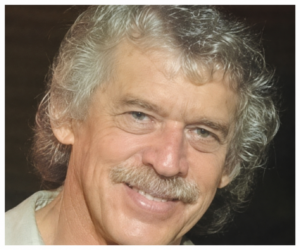 [Greg Brady has lived in Mazatlan since 1998 and describes himself as a musician, teacher, and translator. His first collection of humorous essays,” Married in Mexico”, is available on Amazon. Greg has generously agreed to share his newest series of essays with readers of MazatlanLife. I would definitely add one more title to his résumé: writer. His wit, keen observations, and knack for finding humour in everyday life make these stories a delight to read – Sheila Madsen.]
Published July 11, 2026: CHAPTER 1
February, 1998: I was walking along the seemingly endless Malecon, Mazatlan’s sea walk that is truly one of the wonders of the western world, two days into a two -week dental vacation, gazing in awe at the magnificent sunset that silhouetted the off-shore islands with fiery red and indigo. Cirrus clouds wafted above, eyebrows of the wind. It was February, it was warm, and my bones were tingling with joy.
Then I heard it, faintly at first, coming from the north, heavy psychedelic blues guitar. It sounded like a mixture of Hendrix, Santana and Stevie Ray Vaughan, and it was definitely live. The faster I walked, the louder it grew. Eventually I arrived at end of the Malecon, where the sidewalk folds into the enchanted grounds of the Valentino complex, a shining alabaster replica of Mad Ludwig’s Disney palace perched on a rocky outcropping. In the courtyard outside there was a band playing. One older long-haired graying guitarist stood under colored lights and a spiral staircase, surrounded by younger cats on bass, drums, keyboard, trumpet and saxophone. I leaned against a pillar, transfixed by the spectacle. After a good, long while, and a significant nod from the wild-eyed soloist, they came back to earth and segued into Light My Fire. “The time to hesitate is through”.
We got to talking on the break, he said his name was Guillermo, and everyone called him Memo. He spoke good English, and was very friendly, as bar musicians tend to be. I offered to buy him a beer, but he said he didn’t drink, did I want to smoke a joint? After a couple of days without a toke I was glad to oblige, and we slunk off to where the rocks overlooked the Sea of Cortez. It tasted like the stuff we bought way back in high school for ten dollars a lid, harsh and rank, but soon sent my head spinning pleasantly.
Memo was born in Mazatlan, but had vagabonded around wherever his guitar led him, Tijuana, Mexico City, Playa del Carmen, and Los Angeles where he had married and left a gringa. He was quite a blues scholar, but played a variety of crowd pleasers in both Spanish and English. He looked a lot like Jay Silverheels, who played Tonto in the old Lone Ranger TV show. (In Spanish, tonto means “fool”, and the sidekick’s name has been changed to Toro.)
He had an extra guitar and amp he loaned me and next thing I knew I was jamming every night with La Leyenda, the house band at Pepe & Joe, the first microbrew pub in Latin America, supposedly. There was big Mariano on drums, he looked like a powerful sumo wrestler; Leo on bass, a tall handsome kid; Jesus on keys, a cheerful little guy; Canek on trumpet, serious and disciplined; Arturo on sax, quiet and somber.
The scene was an old rocker’s fantasy. We were outdoors, under the flickering stars and the waving palms. Also sharing the courtyard was a teenybopper discoteca, Bora Bora, and the place was constantly swarming with lovely señoritas in high heels and mini-skirts. We could play as loud as we wanted. Memo’s Marshall stack was pushed to the limit, Mariano pounded the drums without restraint, and the rest of us struggled to be heard above the din.
At the end of the night most of us would cram into one of the oversized golf carts unique to Mazatlan, racing along the waterfront to El Centro, passing around another joint while Memo shouted witticisms at the passersby as we whizzed past.
The days flew by, and when my departure date arrived, I had decided to cash in my chips, pull up stakes, and move to Mazatlan.
I quickly took care of business up in the rainforest and dashed back a few weeks later, with a Telecaster and an acoustic, having rented my mobile home out for five hundreds bucks a month, plenty enough to live low on the hog in Maz. The weather had warmed up a bit, so that at night jackets and blankets were unnecessary, a short-sleeved shirt and a bedsheet were quite sufficient. Nobody has a heating system, the windows are open to the ocean breeze, but barred against intruders. Every day is sunny, and warm, and exhilarating. Living the dream!
Being relatively well-off compared to my bandmates who, aside from Memo, were all students living with their parents, it didn’t occur to me to ask for a slice of the pay. In fact, I made a point of ingratiating myself with the gang, buying rounds of beer and paying taxis. My schoolboy Spanish was reviving itself, and getting better by the day, though I committed many linguistic howlers too numerous and embarrassing to recount. My name itself, Gregorio, is not a popular name in Spanish, in fact it is as ridiculous as can be imagined. Alfonzo, Ignacio, Oswaldo, these are good names, but Gregorio went out of style during the late Middle Ages and no latino Gregory Peck has come along to make it stylish again. The nickname that goes with it is Goyo, or Goyito, and whatever version I was addressed with was usually spoken with some amusement.
Mazatlecos are generally good-natured, and friendly to outsiders. I never felt lonesome or alienated from day one, though I arrived not knowing a soul in town. Another factor in my favor, Mexicans love guitarras. There is no doubt that the key to my success here has been the guitar. Not that I am a great virtuoso, but I have found over the years that there is a great demand for decent sidemen who can quickly and whole-heartedly learn other people’s song lists, and I have accompanied quite a few great virtuosos, with mutual benefit.
The guys in the band, and in fact almost everyone I met, professed amazement when I said that I was in my early forties, never married, no children. How can that be? Was I recently released from prison, a lifelong homosexual, what? How to explain that where I come from, attractive women are less plentiful than here, and lowlife musicians tend to be lone wolves, especially if they are short, stooped, with bad teeth, living in a trailer and driving an old beater. All the young dudes in the band had pretty novias, and they would sit together at a big table and cheer us on, night after night.
On break, Memo would make a point of saying, “Buenas noches” to every young lady who walked by, and there were dozens and dozens of them strolling around from one venue to another. And they all would reply “Buenas noches” with varying degrees of warmth. With uncanny prescience, he flagged down one beauty, she looked like Demi Moore in her prime, and introduced her to me saying that this gringo needs a girlfriend, please help him out. She laughed but not unkindly, shook my hand and said, “Mucho gusto, soy Edith”. And that’s how I first met my future wife.

Published July 12, 2026: CHAPTER 2
One day Memo announced that we needed to have a band practice at his place, and Memo was the boss. He lived in El Centro, one upstairs room in a sprawling dilapidated house centered around a large atrium dominated by a mango tree taller than the roof. We had to move out all of the furniture, sofa, bed, table and two chairs, to make room for the minimal gear, the horn section standing on the stairs. The fridge could barely hold all of the beer needed, luckily there was not much food taking up space in it.
We ran through an old Willie Dixon blues, Little Baby, that the Stones had recently covered, Stevie Ray Vaughan’s If The House Is Rockin’ Don’t Bother Knockin’, and a couple of songs in Spanish I instantly liked but had never heard before. One was Los Dioses Ocultos by Caifanes and another was A.D.O.by El Tri. At the time I did not know anything about the vast universe that is Musica Latina, so much to learn!
Thinking back to those early days, I cringe to think of all the faux pas, social blunders, and dumb blurtings I committed. Hardly anybody ever reprimanded me, good manners being such an important part of life here, but now looking back I reprimand myself. It was probably a good thing that my command of the Spanish language was not yet good enough to clearly enunciate every thought that popped into my head, or it could have been worse. And I couldn’t have hoped for a more jolly and tolerant bunch of guys, though they must have gotten plenty of laughs observing this crazy gringo in action.
That day of rehearsal, they did take me aside and give me a few pointers. Basically, we wanted to keep the job, and part of that meant getting in good with the waiters and the customers. Please, Goyo, do not snap at them if they grab your microphone and start shouting along. And if someone wants to get up and play your guitar, you let them.
Back in my old stomping grounds, you don’t let strangers touch your guitar. Forget it. Waiters jumping on stage and making pests of themselves are pleading for a beating. When I first saw the movie Under The Volcano, set in Cuernavaca, the scene where the ambassador’s nephew gestures to a passing mariachi who then smilingly hands over his guitar, it seemed so implausible. But I came to find out, that’s the way it is here.
Chastened and apologetic, I promised to be more tolerant about that kind of thing in the future.
After we had thrashed out enough songs to satisfy taskmaster Memo, the younger generation started climbing the mango tree, reaching the high hanging fruit, joyously shaking branches and swinging drumsticks and broomsticks so that they showered down and the rubble floor of the atrium was littered with hard, green little mangos. Memo and I watched from the railing of the stairway. “They are harvesting them too soon”, he said. “By the time they are perfect, they will be all gone.” 
One of the interesting aspects of the Pepe & Joe gig was the awkward fact that the actual owners of the Valentino complex, which included maybe seven or eight different nightclubs, had theoretically forbidden roc-an-rol from the premises. Since we were right out there in the open, a couple of dozen yards from the where the Avenida del Mar turned into the Avenida Camaron Sabalo, playing loud enough to drown out all the other noises, we were not exactly invisible.
In a way, the sheer insanity and commotion all around helped to protect us. The pulmonia drivers were lined up on the sidewalks, buzzing around the adjacent traffic circle with the fountain, constantly blasting their formidable speakers to the limit. Getting heavy rotation were I’m A Barbie Girl, YMCA and a new version of Never On A Sunday whose refrain was a Spanglish word salad the gist of which was “No tengo dinero…I really need it now”. Fortunately for those of us with good taste, Santana had just come out with a hot single which was a huge, inescapable hit, Smooth, and it reverberated up and down the streets everywhere you went.
So, we blended in sonically with the cacophony swirling around us, and the courtyard was always full of revelers so we weren’t easy to spot from the street. We were tucked behind some pillars under a gridiron spiral staircase, giving us a luscious view of all the ladies proceeding up and down while protecting us from being observed when the dreaded limousine pulled up and the royal family emerged. The patriarch needed a wheelchair to get through the mob, and by the time it was unloaded and in action, we were inside hiding our instruments behind the bar.
The manager of Pepe & Joe had independently decided he made more money with roc-an-rol, but there was also a mariachi outfit we traded sets with. They wore matching flashy uniforms, tailored suits and flowing cravats, all ten of them, and brandished their guitars, violins and trumpets with great pride. Whenever we went into covert mode, they were happy to take over.
Another twist in our relationship with the establishment was the payment routine. We were actually getting paid by the Tecate brewery corporation, which produces and distributes a wide variety of beers, including Bohemia, XX, Carta Blanca and Tecate. In theory, we were given a check every two weeks, around the 1st and 15th of the month. In reality, the checks were sporadic, and never on time. Typically, they would arrive a week or two late, or more. Memo explained to me that the company would as a matter of policy delay all payments of any kind on a massive nationwide scale, using the extra days and weeks to squeeze as much interest out of their capital as possible.
This was not a direct hardship for me, I was not getting paid anyhow, but for the rest of the band it was a real problem. There were nights when, upon being told that the check was still in transit, the band would disgustedly vote to not play, and the mariachis worked a double shift.
One such night, Memo said, let’s go check out my friend Freddy’s band a few blocks up in the Golden Zone. Little did I know I was about to meet my second Mazatlan music mentor.

Published July 13, 2026: CHAPTER 3
We walked further into the glitzy Zona Dorada than I had ever been before. It was a severe contrast to the older Mazatlan I had been immersed in. It was loud, music pulsating out of everywhere, even pharmacies would put huge speakers on the streets and try to out blast the surrounding businesses. Nightclubs and restaurants were everywhere, and revelers were swigging and swaying along the sidewalks and spilling into the streets. It was spring break season, and most of the multitude were pale-faced and pie-eyed.
The main drag, a long strip that extends for miles, is Avenida Camaron Sabalo (Shrimp Shad Avenue). The area has changed tremendously over the years, but the Panama restaurant on the corner was my guidepost then and still is. Turn there and head for the beach, so close you can smell it, and a block in, is where the nightclub Harley’s was. What a rocking joint it was.
We walked in, and there was Camaleon at the peak of their glory years. Freddy shredding on lead guitar, Nico, Luis and Mario pumping out solid rock behind him through a dynamite sound system, they were light years beyond our humble rag-tag La Leyenda, they were a grade A show band, smoking hot.
The star of the show was Freddy, though he was not a show-off at all, more of a Jerry Garcia-esque modest, reluctant hero. A decade or so younger than Memo and I, his main influences were more modern, technical and flamboyant than ours: Eddie Van Halen, Joe Satriani, Yngwie Malmsteen, daredevils from another planet. I would later come to see how deep and versatile Freddy’s musicianship was, his mellower sides, but that night, in that setting, he was on fire and dangerous.
The crowd, mostly very young, very inebriated spring-breakers from up north, was going ape. The dance floor was a scary mosh pit, the balcony was even scarier as writhing bodies challenged the railing. Girls were dancing on the table-tops, some shirtless. It was hard to get the waiter’s attention and order a beer and a water over the roar of the band.
On the break we walked around the block, puffing away, and some how I got talked into getting up and playing guitar with the band in the upcoming set. I tried to chicken out, but they insisted. I asked Freddy if his guitar were in normal tuning, as I could not recognize or grasp the finger formations he was using, and he assured me it was standard, but detuned down a half-step to E flat, to facilitate heaviness.
So, first song of the next set, there I am on-stage with Camaleon, at Harley’s, nervous, trembling, and off we go into my old stand-by Johnny B Goode. Compared to what they had been playing, Scorpions, Van Halen, Billy Idol, venerable Chuck Berry might seem downright corny, especially for such a juvenile crowd, but Mario, Luis and Nico were thundering along like a locomotive and the dance floor was packed again. I had trouble finding the key to sing, since we were in between G and A, and to make things worse I could not come up with the exactly right words for the verses, but I came up with some alternative ones and got it right on the chorus. “Go! Go Johnny go!” Not to brag, but it went over okay. Despite all the exuberant applause, I felt that it was a good time to quit while I was ahead.
To my mind, Freddy’s and Memo’s guitar styles represent two distinct corners, separate languages, Yin and Yang, Plato and Aristotle, Fitzgerald and Hemingway. Memo was all about bending blue notes, spacing way out, soaring above the song like a condor that never wanted to come back down to earth. Freddy was so educated, disciplined, he could play anything note for note and add a lot of flourishes to boot, then put it into overdrive and make it better than the original. One thing they had in common, they never ran out of ideas. Me, after a round or two of licks from my comfort zone, I’m heading for the barn, that’s enough, but those two could go on endlessly and keep burning brighter.

Mazatlan in the spring is a slow roast. You’ve heard of boiled frog syndrome? Every day it gets a little bit warmer. As April turns into May, it stays brisk by night, balmy by day, and at some point in June you realize you are heading for four months of steam-broiled hell. Having spent ten winters in Edmonton, I love the tropics. Better forty degrees centigrade than minus forty.
The flocks of tourists and snowbirds start flying back to the north countries just before Easter, by mid-May they are nearly extinct and as a result live rock music sung in English falls out of favor, as the bottom drops out of the market.
“Hey, Goyo, I gotta go, man.” Memo broke the news without a grin or a wisecrack, I’d never seen him so serious, downright sad. “This town in summer… you don’t know, but you’ll see. I’m leaving you in charge of La Leyenda, man, keep it going.”
“Wow, man, that’s heavy. What…uh…where are you going?”
“Mexico City. Some compadres have a band there, it’s called Five Fingers. We’ll see, a ver que pasa.”
So just like that, our messiah left (though he did return to us various times over the decades) and the band was leaderless, rudderless, on the rocks. And providentially, my third Mazatlan music mentor appeared on the scene and guided us through that rough passage. Enter Roberto.
He was an old friend of Freddy and Memo from way back, and a bit older than all of us. Good old Roberto, a fascinating character, very intellectual, a civil engineer by day, rock star by night. He was recently divorced, and his wife of twenty odd years had forbidden him to play music publicly. Now he was making up for lost time.
We had first met in the wee small hours of Mexican Mother’s Day. I continued, with Memo, Freddy and a few other cohorts, wandering the streets of El Centro with beers and guitars in hand, performing a time-honored ritual, waking people up and singing Las Mañanitas for them, like it or not, house after house, over and over. I’m wondering what would it take to get arrested in this town?
Roberto played pretty good keyboards and guitar, and he had a strong smooth voice. We hit it off great from the start, well enough so we could argue about music without rancor, and as time has gone by, I now see his perspective better, albeit posthumously.
He was very much into old school rock’n’roll, both in English and Spanish. He did not have much fondness for the blues back then, though in his later years he eventually came round to appreciating the genre. His problem there was he liked complicated songs, with lots of jazzy altered chords, and the blues was just too basic for him. We used to lock horns over arrangements, and he always ended up getting his way. The engineer mentality, even when they’re wrong, they’re right. He would take a song like Summertime or Unchain My Heart and turn it into a bossa nova opus.
The first song we did together was Fats Domino’s Blueberry Hill, which he sang in both languages. Colina Azul! He had that rollicking piano going and the few customers we had, seemed to like it just fine.
In those days, communication was not what it is nowadays. Memo disappeared and it was a few years before he reappeared, then left, then returned. Meanwhile, the show must go on!
Published July 13, 2026: CHAPTER 4
As our work schedule was gradually reduced to weekends due to waning crowds, I was spending much of my time at Locker Room, an open -air restaurant/bar on the Avenida del Mar, about half-way between the Fisherman’s Monument and Valentino’s. It was a fun if inelegant watering hole for students from the nearby University of Sinaloa (UAS). Most of the kids in La Leyenda hung out there. We’d break out the acoustic guitars, and howl at the moon. It was the cheapest beer in town, 6 pesos a Pacifico back when it was 8 to the dollar. The menu was limited to canned tuna ceviche with tostadas, or canned tuna ceviche with crackers, including all the hot sauce you wanted. The lovely Edith happened to work there.
She was studying English and I felt honored to be helping her with her homework. She was bright and witty and I could understand what she said when she spoke Spanish. She was twenty-five, still living with her large family in a small house on a distant hill. To say I flipped over her the moment we met would be an understatement, but here in Mexico affairs of the heart move at a much different, more languid pace. Instead of a first date score at the drive-in, it’s more like you start by going to the movies with her and a few family members. Very slow going.
There was a rival for her affections, an English teacher named Andrew. She introduced us one night that we were both there drooling over her, and we quickly became fast friends. What a great guy, Andrew. He had recently arrived from Prague, where he had abandoned his beautiful betrothed. (“It was her father. He’s this industrial tycoon, and he kept saying when you marry my daughter, you won’t be teaching English, you’ll be working for me, making big money. I want my grandchildren to have the best of everything. That’s when I knew I had to get out.”)
He was possibly the last of the great Canadian bullfighters. He ran with Los Forcados, a local troupe of acrobatic stalwarts who would warm up the bulls for the main acts at the Plaza de Toros. They would literally take the bull by the horns, do handstands atop it, jump over it, all kinds of stunts the matadors would not attempt. Asked why he did such dangerous routines over and over, he laughed and said that the adrenaline rush was overpowering, irresistible.
When he later heard of Edith and my engagement, he punched me on the shoulder and said, “You had a guitar, you bastard!”
Published July 13, 2026: CHAPTER 5
Roberto mentioned that he had another band he played with twice a week called Reencuentro. I asked when they played so that I could go check them out, and he said -well you can’t. It’s part of a tourist package. Later that summer, though, there were some personnel changes and the three remaining musicians, Roberto, Felo and Javier, invited me to join them.
The gig was at El Espectaculare, which back then was an open air Greek Theater replica. The stage was vast, they could have performed the Nutcracker on it with an orchestra on the side. Backstage had rows of mirrors above sinks. You had to shout to communicate with Abram the soundman, the control booth was out in the bleachers. There was a rather gross-looking all-you-can-stomach buffet. First, we would come on and play for an hour, then a dozen and more dancers, dressed up as mythical native gods, would pour out and close the show. It was hot and muggy, and crowds were sparse, mostly grumpy oldsters who didn’t seem to like the music or the dancers all that much. Not to mention the food.
Our repertoire was shameless: La Macarena, La Cucaracha, and Speedy Gonzalez were among our top crowd pleasers. The Spanish version of Achy Breaky Heart (Mi Pobre Corazon) was also on heavy rotation.
There were a few songs that really opened some doors for me, leading me toward greater awareness. El Rey by Jose Alfredo Jimenez is just one of many dozens, hundreds of masterpieces JAJ composed in his short, brilliant life so long ago. He also wrote the much beloved El Corrido De Mazatlan.
Besame Mucho is one of those “where have you been all my life?” songs, so glad to get acquainted with this haunting gem. I had heard it before, but it never occurred to me to play it until we were playing it. What a geometrically perfect composition.
And then there’s La Negra Tomasa, which dates back to 1930’s Cuba. “Estoy tan enamorado con mi Negra Tomasa.” The rhythms in that minor key tailwagger are hypnotic.
Possibly the best part of the gig was having band practice there. It was closed five days a week, so we could go there anytime we wanted and jam our hearts out to the open sky above us. And we did. Playing anything, we wanted. We would roll in aboard a red auriga, with a truckful of gear, an ice chest of beer, smokes of both kinds; the watchman would let us in and partake too. All my life, I’d wanted to jam out in a Romanesque amphitheater just like Pink Floyd in Pompeii!
That summer of Reencuentro at El Espectaculare, was the kind of spell I look back on and think, “Wow, how could something so cool happen to me?”
It was not too long before Felo Sr our savvy old bass player decided we were getting too rocky for his tastes, and introduced us to Felo Jr. It was a poignant moment when he offered us his only son as compensation for leaving. The good part was, young Felo was and is a monster on bass. He and drummer Javier were both going to the same college, so there was a new balance in the band: two old guys vs two young guys.
We survived summer, and as the upcoming high season approached, we were very well rehearsed, and still hanging in there as house band at Pepe & Joe. When El Espactaculare announced that they were hiring another band to replace us, something more appealing to their clientele, we did not shed any tears. And when Felo said that, unlike his father, he refused to play Speedy Gonzalez any more, we threw La Cucaracha, Pobre Corazon and La Macarena on the junkpile, too. Rolling with the punches, going with the flow, off we went in search of stardom and a steady gig or two.
Published July 14, 2026: CHAPTER 6
Mazatlan has a long-standing tradition of tolerance and even enabling of sinful behavior. People come from all over to have a good time, and the authorities allow this, up to a point. You can take your family, your dog and a twelve pack to the beach, let the pooch run free, and get away with it. My kind of town.
As the summer faded and the divine weather rolled in, along with an influx of tourists and travelers, the coffers started jingling and the town rose to its familiar role of welcoming host. The entity formerly known as La Leyenda kind of disintegrated, like a cookie crumbling. Mariano went on to form a new heavy metal band, Adiccion. Jesus joined a touring band called Sombra (Shade), which had a dress code (all black) and was headquartered in Guamuchil to the north. Canek went on to an orchestral career in Europe. Arturo went reggae and became known as “El Calabro”. Leo moved up from bass to guitar, and traveled around. Loveable Humberto Santana, an excellent singer, stepped in on bass for a while, but only a while.
Roberto, Javier, Felo and I found ourselves the last ones left at Pepe & Joe, and it was getting lively again. We needed a new name and Javier suggested Soma, the behavior control drug in brave New World. Soma it was.
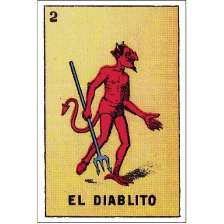 Javier’s nickname was “El Diablito”, one he relished and encouraged. He wore a T-shirt with the famous Loteria illustration, and sported a diabolical goatee.
He had a collegiate passion for being a rebel, a free thinker, an atheist, an opponent of the establishment. He loved to discuss and discourse on Nietzsche, Marx, religion, the arts. He and Roberto would get into long back-and-forth’s about the price of rice to the point where half our rehearsals consisted of those two going at it, and amusing themselves greatly in the process. Whenever Roberto would say, “Te voy a decir una cosa” (I am going to tell you something), Felo and I would shrug, unstrap our axes and step out for a smoke and a beer.
Though Felo was the youngest and newest band member, he was definitely the best musician among us. He was adept at reading and even writing out those funny little dots, and understanding what they meant. I have always felt that if they want you to play an A, they should just write A.
In contrast to Felo’s well-trained perfection, always in the right place at the right time, Javier was more of a sneakers-in-the-dryer, Keith Moon style drummer, very imaginative but where’s the backbeat? It made for a dynamic sound, kind of like the Who’s rhythm section, steady bass, crazy drums. Both Javier and Felo had passable voices, but they were shy about it, and Roberto ended up singing the lion’s share.
We were rehearsing a lot, it seemed to me. The Mexican work ethic is impressive, in general, and this outfit was a good example. We were playing almost every night, sometimes twice in one day, and still rehearsed twice a week. We were tight!
We added twists just for fun. On Proud Mary, after the penultimate “Rollin’ on a river”, Javier would switch into this hilarious Latin beat he called “El caballito” and we would finish the song with it. We worked out a rocking version of Corrido de Mazatlan that did not sit well with the mariachis. We recorded an original of mine whose only lyric was “Cerveza!” We squabbled frequently, but overall abided each other’s company and shared a lot of laughs and a lot of good times.
 Back then there were not nearly as many rock bands as there are as I write this. Camaleon was the King of the Hill, no question. There was an old style rock’n’roll band, the Sharks, that catered more to an older local following. Roberto’s friend and contemporary Rafael, a versatile singer guitarist, had a band called Fusion that was another collision ala graying musician teams up with young whippersnappers. There were other more senior musicians still kicking around who were associated with Los Rangers, a legendary band that broke the ice for rocanrol in Mazatlan. Also there was Bassist Tani, Guitar Wizard Hector “Muelas”, and Drummer Bichochas all circulated around. It was a pretty close-knit community. There were constant palomazos (acts of getting up on stage for a guest appearance), and a certain camaraderie in the air, like we were all together as part of a movement, Roc en Mazatlan.
As for foreign musicians, there were only a handful on the scene. Dick Damron and his Canadian Country entourage were spending winters in the Golden Zone but our paths did not cross for a few more years. Tough old Jock was a sax and flute master who had recorded with some of the immortals including Harry Belafonte and Henry Mancini. There was luthier Wally, who had been hanging around off and on since the seventies. He was a tall handsome guy with a very listenable voice, and he mostly accompanied himself on acoustic guitar. And there was Glen.
Glen was a singer who would storm the stage wherever Camaleon was playing, pretending he was in the band for a while. And he kind of was. He ran a company out of Seattle called MusicLord, which sold affordable amplifiers and such. Somehow, he obtained all the necessary import permits and suddenly Mazatlan was flooded with MusicLord gear. I still have a fine ML speaker that is pushing thirty and still doing the job. Glen applied quite a bit of the company proceeds into the band, bought Freddy a rare scalloped-fret Stratocaster, and so had a welcome aboard pass anytime he wanted to get up there and front the band.
He was always entertaining to observe. He was tall and buffed out, kind of looked like Nicholas Cage with long golden hair, handsomely ugly, and he would wear skin tight spandex pants that threatened to rip open as he gyrated like Jagger across the cramped crowded stage. Van Halen’s Panama was one of his better ones. With a band like Camaleon behind him, it sounded amazing. I didn’t realize what a great singer Glen was in his own right until ten years later I played bass for him a while. Onstage he was a wild man, but off stage, he was lucid and clear-headed.
Is there something about Mazatlan that attracts oddballs from all over, or is it just me?

Published August 7, 2026: CHAPTER 7
1998 was an epic year for me. A year of drastic change. How drastic? I had rung in the New Year playing country rock at Dollar’s Corner Tavern, where they sold chewing tobacco and pickled eggs over the counter, there was a waiting line for the punchboard, you threw your peanut shells on the floor, and the dance floor was generously sprinkled with sweet smelling sawdust. Anybody wearing anything other than jeans stood out like a bowler hat at a rodeo. We opened with Six Days On The Road and ended with Boot-Scoot Boogie.
New Year’s Eve 1998-99 was very different. We opened with Samba Pa’ Ti, and closed with Lamento Boliviano. The tourist crowd was dressed for the tropics, shorts, sandals, and funny T-shirts. It was a relatively cold winter, dipping down into the 60’s at night, so the locals were breaking out their sweaters, scarves and wool hats. Part of Soma’s mystique was casual attire. Roberto distinguished himself wearing collared shirts, and I made the Daffy Duck straw fedora my fashion statement.
New Year’s Eve ‘98-’99 marked a sharp turning point for our ascending band. We were offered the night at Tony’s, a prestigious venue compared to Pepe & Joe. The initial invitation plunged us into lengthy discussion: should we accept?
On the one hand, Pepe & Joe was a reliable gig, except for the sporadic pay aspect. If we told Capitan Poncho we were playing up the street at Tony’s, and flaking on the biggest night of the year, he might replace us. On the other hand, Tony’s was way higher up the ladder in terms of being a prestigious, well-paying venue.
Pepe & Joe, long defunct, was a great idea that did not catch on. It featured artisanal ales, and its gleaming copper brewing tanks towered above us behind glass showcases. Personally, I like a tepid raspberry/espresso stout, but in the land of Cerveza Pacifico, I was ominously outnumbered by lager loyalists. Pepe & Joe was mostly an outdoor space that everyone walked past without ordering anything. To me, it was heaven. If Doug and Kurt and the gang could see me now, surrounded by palms and stars and señoritas, ocean breeze ruffling my sleeves while I’m cranking up the volume, guzzling like an Australian, not worrying about getting pulled over driving home. Despite my enchantment with the place, to the rest of the band it was nothing special.
Tony’s was definitely something special. A triangular point at the confluence of the two major streets at the southern end of the Golden Zone, just up from Pepe & Joe, it was a happening joint. Camaleon played there regularly. The only places that rivaled it were Harley’s and Gus Gus.
Instead of pickled eggs and peanuts, all kinds of delicacies were on the menu. For the price of a corn dog with mustard and fries with ketchup back home, here you could have breaded shrimp with beans, rice, unlimited tortillas and fresh salsa. The dance floor was a lurid place, and the girl-watching was downright criminal. And they wanted us for New Year’s Eve!

SOMA -Left to right: Javier “El Diablito”, Roberto, Gregorio[author], and Felo
It was one of those show biz deals. Roberto’s good friend Rafael and his band Fusion were the house band at Tony’s, and they received a lucrative offer to play a private party New Year’s Eve. The prevailing rule in Mazatlan is, in such a situation, you must provide a substitute act and then your absence is excused. So, Rafael asked us to fill in.
Of course, we were thrilled and eager, like a minor leaguer when the Dodgers call, but there was some trepidation. Mexican childhood folklore features the gem of a fable, El Perro de las Dos Tortas (The Dog With Two Tortas/Bunwiches), about the unfortunate pooch who found himself caught between two choices, and lost both due to indecision. He who hesitates is lost.
Too bad we couldn’t find a replacement band for ourselves at Pepe & Joe. Too bad for Pepe & Joe. Not that there was any shortage of loud noise throughout and all around the Valentino complex, even though there was an empty space where Soma was supposed to be playing. Somehow, they survived the night without us, but we never did play there again, ever.
Meanwhile, further on up the road at Tony’s….

Published August 7, 2026: CHAPTER 8
The owner, Antonio “Tony”, was from a small outlying pueblo known as El Recodo, whose main claim to fame is being the birthplace of Banda music, though Mazatlan is the cradle from which Banda has flourished. Tony, however, liked rock music. He liked to have a good time, catch a buzz, shoot the breeze, joke around, get up on stage and sing along with the band. We had been advised that his two favorite songs to sing were Losing My Religion and No Puedo Vivir Mas Sin Ti, and we rehearsed them thoroughly in preparation.
Not to brag, but we went over very well. So well, in fact, that we were offered the job as house band, replacing our friends in Fusion who had been kind enough to give us the opportunity to steal their gig. All these years later, Rafael and I can joke about it, but at the time it was rather awkward. Oh, well, that’s show biz.
Tony’s was a triangular space with waist-high walls topped by open windows and no roof, so whatever was happening on the two streets was part of the ambiance. People walking by could lean in and hang out with their feet on the sidewalk outside. There was a raised stage in the small corner, colored lights overhead, a dynamite built-in PA system, and even an enclosed sound booth that connected to a mixer on stage. We felt like we had really hit the big time.
The clientele at the afore-mentioned Dollar’s Corner Tavern was pretty much the same likeable bunch of grizzled aging regulars, year after year, whereas Tony’s was a different crowd every night. And a lively crowd it was, mostly young Nordic partiers, the hard-charging herd that has since migrated to Cabo and Cancun. It was all the rage to get up on top of the sturdy little cement tables about the size of an extra-large pizza and dance while being cheered on and urged to strip. The abundant waiters encouraged this kind of misbehavior, made a big show out of a simple tequila popper, and loved to dirty dance with any fired-up vacationing college babe having a wild night out with her girlfriends.
Tony had a penchant for hiring young dudes from his rancho El Recodo, a very close-knit community. These characters had a certain ranchero mentality that distinguished them from the more sophisticated urban Mazatlecos. They were boisterously festive, often in a mocking way, and had lots of gags they like to pull. For example, they would get your attention, point to something in the distance, and when you turned to look, they would rub their eye against their inner elbow, then smirk because you fell for it. They constantly did this to us, to each other, to everyone, over and over.
Another of their zany tricks was to place someone on a high bar stool, center stage, under the purple and red -light beams, and blindfold them. Then a procession of waiters would come out with a decorated platter featuring sparklers, whipped cream and an upright banana supported by two purple plums. Upon removal of the blindfold, the guest of honor was expected to bite off the tip of the banana. Pretty disgusting right?
 I wish that I had not let it slip one January night that it was my birthday. My bandmates conspired with the staff, and on our first break I found myself manhandled and dragged up to the dreaded chair. I was outnumbered, overpowered, and quickly blindfolded. Resistance was futile, and might have turned violent. I knew what to expect when they removed the bandana, and kept my mouth as tightly closed as a tetanus victim. No matter how adamantly I shook my head, those waiters would not take no for an answer. They had me in a headlock, pressing their thumbs into my jawbone, while the crowd chanted “Bite it! Bite it!” So ,I did. I don’t hold up well under torture.
As a musical act (Soma!), we were still in that glorious early stage where everyone is earnest and enthusiastic, joyfully working together, thrilled to be having success, conquering fresh audiences’ night after night, laughing all the way. On breaks we would sneak off for a toke, discuss the next set’s song list and enjoy the camaraderie of it all. Since we rarely saw the same faces twice, we did not have to be constantly bringing in new material, but we did anyhow, just for our own amusement. Maybe that is where the first elements of discord began to creep in.
There was an undeniable generation gap. Roberto and I were old enough to be Javier and Filo’s fathers, and our musical tastes reflected it. The young bucks wanted newer material, the latest Red Hot Chili Peppers, while Roberto and I were championing 50s rock and roll. We managed to balance the two extremes for quite a while before the wheels fell off.